BACK
MARKETPLACE APP | LOGO & BRANDING, WEBSITE, PROTOTYPES, USER RESEARCH
Safeli Shop began with deep user research to understand how students actually buy and sell items on campus. Through interviews, surveys, and informal conversations with UNC students, we identified recurring concerns around safety, trust, and convenience. These insights shaped the core problem we set out to solve: creating a marketplace that feels safer, more intentional, and built specifically for student life.
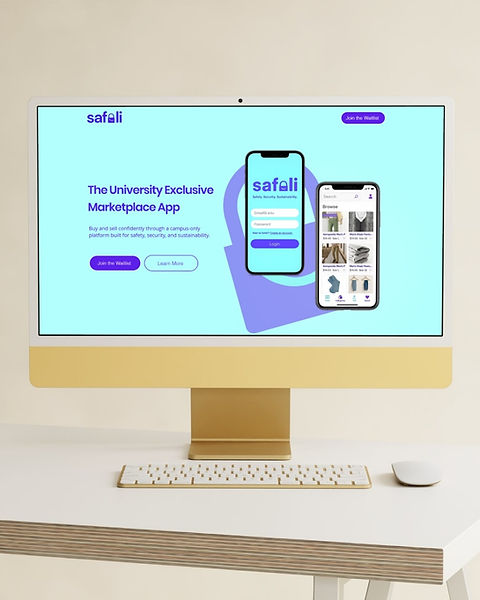
For Safeli Shop, prototyping played a central role in shaping the product and validating its core value proposition. We created a high-fidelity, clickable prototype that mapped the entire user journey, from discovering listings to completing a transaction with built-in safety measures like designated pickup times and locations. This prototype allowed us to simulate real user behavior, identify friction points early, and test how effectively the platform communicated trust and security. It also became a key tool for user interviews, feedback sessions with UNC students, and pitch presentations, helping stakeholders clearly visualize the product before development began.
The design process for Safeli Shop was rooted in user-centered thinking and intentional simplicity. We focused on creating an experience that felt intuitive, modern, and safe, especially for students navigating peer-to-peer transactions. Design decisions prioritized clear information hierarchy, consistent visual language, and ease of navigation to reduce cognitive load and encourage confident decision-making. Throughout the process, we iterated on layouts, flows, and visual elements to ensure the platform not only looked polished but also supported Safeli Shop’s mission of creating a secure, student-focused marketplace.
For Safeli Shop, we designed marketing assets that clearly communicated the platform’s value while staying visually consistent across channels. From social media graphics to website visuals, our focus was on clarity, trust, and engagement, ensuring each design supported user understanding and encouraged adoption.